


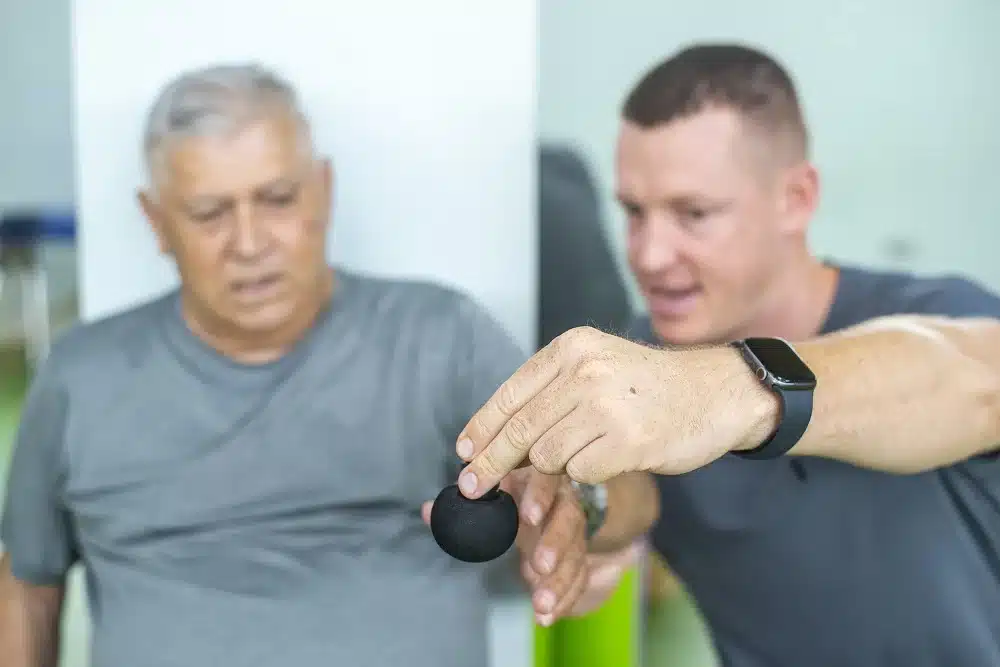
Neurological rehabilitation doesn’t end when the therapy session finishes. On the contrary: what happens at home, between sessions, can be just as important to recovery as the clinical work. At Rehabot we always say it: the therapist opens the path, but the patient — and their family — are the ones who walk it every day.
Why Is Home Rehabilitation So Important?
The brain learns through repetition. For a motor or cognitive function to become consolidated, it needs to be practised many times, in different contexts and with real-life meaning. A weekly or twice-weekly therapy session, however well-designed, is not enough on its own if it is not accompanied by daily practice in the environment where the patient actually lives.
Practical Tips for Effective Home Rehabilitation
1. Follow Your Therapist’s Instructions Precisely
The exercises your therapist prescribes are not optional. They are specifically designed for you, your current condition and your goals. Doing them differently, skipping them, or substituting others can delay recovery or create incorrect compensations that are later difficult to correct.
2. Build a Fixed Routine
Linking exercises to specific moments of the day (on waking, after breakfast, before bed) makes consistency easier and reduces the mental effort of remembering. Consistency matters more than intensity, especially in the early stages.
3. Adapt the Environment to Encourage Movement
- Clear walkways to facilitate safe movement around the home.
- Install grab bars in the bathroom if there is a fall risk.
- Use chairs and seating at the right height so that standing up becomes a functional exercise, not a struggle.
- Keep exercise materials (ball, resistance band, chair) readily accessible so there are no excuses to skip a session.
4. Involve Family in a Positive Way
Family support is vital, but there is an important difference between helping and overprotecting. Doing for the patient what they can do themselves — even if it takes more time or effort — removes opportunities for practice and can create dependency. The golden rule: encourage, accompany and let them do.
5. Observe and Communicate Changes to the Therapist
Has something improved this week? Has there been a fall? Is the patient more tired than usual? All of this information is valuable to the therapist and allows the programme to be adjusted in real time. Keep a short diary or note observations on your phone.
Rehabot: The Therapist Who Comes to You
At Rehabot we offer home neurological rehabilitation across the Costa del Sol, the Guadalhorce Valley and Málaga. We believe many patients recover better in their own environment: without exhausting travel, practising in the real spaces where they live, with greater motivation and lower stress.
Would you like a specialist neurological therapist to visit your home? Contact us for a free initial assessment. No travel, no waiting.