


Pediatric occupational therapy is a specialized health discipline that helps children with neurological challenges develop essential motor, cognitive, and emotional skills for their daily lives.
Pediatric occupational therapists intervene in cases of developmental disorders, brain injuries, autism spectrum disorder (ASD), cerebral palsy, ADHD, and various genetic conditions, designing individualized treatment plans for each child.
What is pediatric occupational therapy?
Pediatric occupational therapy focuses on assessing and treating difficulties that affect children’s participation in daily life activities. Its primary goal is for each child to achieve the greatest possible independence in tasks such as dressing, feeding, writing, playing, and interacting with their environment.
Unlike other therapeutic approaches, occupational therapy in pediatrics uses play and everyday activities as the main intervention tools, which facilitates the child’s motivation and commitment throughout the process.
Specialized approaches in pediatric occupational therapy
Pediatric occupational therapy relies on various evidence-based approaches to address the specific needs of each child.
Sensory integration
This approach helps children process and respond appropriately to sensory information from their environment (tactile, auditory, visual, vestibular, and proprioceptive). Occupational therapists design sensory activities that stimulate motor, cognitive, and emotional development, especially beneficial for children with sensory processing disorders or autism spectrum disorder (ASD).
Training in activities of daily living (ADL)
Pediatric occupational therapists work with children to help them become independent in essential daily tasks: dressing, eating, brushing their teeth, washing their hands, buttoning clothes, or using utensils. Training in ADLs (Activities of Daily Living) is key to fostering a child’s independence and self-esteem.
Play-based occupational therapy
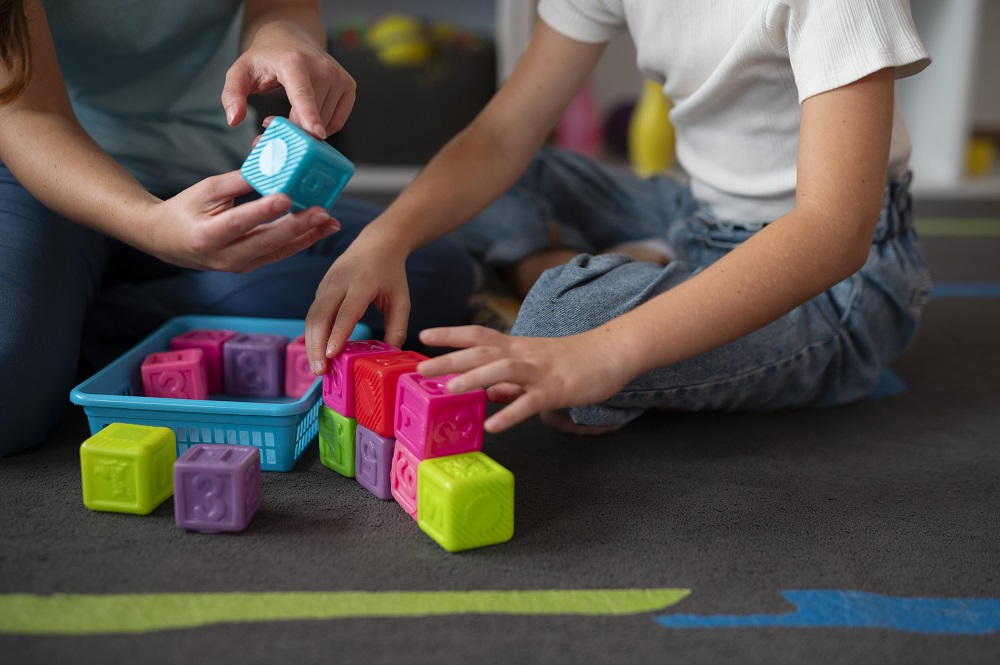
Therapeutic play is an essential part of pediatric occupational therapy . Through structured play activities, therapists foster the development of motor, cognitive, and social skills in a fun and motivating environment that encourages the child’s active participation.
Benefits of pediatric occupational therapy
The benefits of pediatric occupational therapy encompass multiple areas of child development:
- Improvement of gross and fine motor coordination .
- Development of cognitive skills such as attention, memory, and problem-solving.
- Increased autonomy in activities of daily living.
- Strengthening the child’s confidence and self-esteem .
- Improvement of social and communication skills .
- Reduction of problematic behaviors and anxiety.
- Promotion of play and participation in recreational activities.
Development of motor skills in pediatric occupational therapy
One of the fundamental areas of pediatric occupational therapy is the development of motor skills, both gross and fine.
Gross motor coordination
Gross motor skills involve the control of large muscle groups: crawling, walking, running, jumping, and maintaining balance. Pediatric occupational therapists use movement games and adapted physical activities to stimulate and strengthen these motor patterns, improving a child’s physical ability and confidence.
Fine motor coordination
Fine motor skills encompass precise movements with small muscles, necessary for writing, cutting with scissors, manipulating small objects, or buttoning clothes. In pediatric occupational therapy sessions , techniques such as using modeling clay, puzzles, building blocks, and handwriting activities are employed to develop finger strength, precision, and dexterity.
Development of cognitive skills
In addition to motor skills, pediatric occupational therapy also addresses cognitive development. Through board games, puzzles, interactive activities, and planning exercises, therapists stimulate abilities such as sustained attention, working memory, problem-solving, decision-making, and creative thinking.
These activities, integrated into a playful context, allow children to strengthen their cognitive skills in a natural and motivating way.
When should you seek pediatric occupational therapy?
It is advisable to consult with a pediatric occupational therapist when a child presents difficulties in any of these areas:
- Delay in motor development (crawling, walking, object manipulation).
- Difficulties in writing, cutting, or crafts.
- Sensory processing problems (hypersensitivity or hyposensitivity).
- Lack of autonomy in daily activities for their age.
- Difficulties with attention, concentration, or planning.
- Diagnosis of ASD, ADHD, cerebral palsy, or other neurological conditions.
Pediatric occupational therapy at Rehabot Clinic
At Rehabot , we have highly qualified pediatric occupational therapists specializing in addressing neurological challenges in children. Our team provides high-quality, child-centered, and evidence-based care.
We work closely with each family to develop an individualized treatment plan tailored to the child’s specific needs. We use specialized approaches such as sensory integration and therapeutic play in a playful, safe, and welcoming environment.
Our goal is to help each child reach their full potential and improve their quality of life in all areas: motor, cognitive, emotional, and social. We also provide guidance and support to families so that progress continues at home.
Looking for quality pediatric occupational therapy? Contact Rehabot Clinic and discover how we can help your child in their development.
Leave us your data to start your treatment